Shed Heat and Ventilation: Keeping It Workable
A tin shed can be an oven or a fridge. Here is how to tame it.
1. Insulate the roof
Most heat comes through the roof. Insulation under the roof sheets, or insulated panels, makes the biggest difference both summer and winter.
2. Let hot air out
Hot air rises. Whirlybirds or ridge vents let it out; low openings let cooler air in.
3. Shade
Shade the western wall and doors in summer. Light-coloured roofs absorb less heat.
4. Heating safely
- Keep heaters well away from timber, sawdust, fuel and chemicals.
- Never use fuel-burning heaters in a closed shed. They make carbon monoxide.
5. Fumes and dust
Ventilate when painting, welding, cutting or using fuel engines. Use dust extraction and a mask for sawdust.
6. Quick summary
- Insulate the roof.
- Let the hot air out.
- Heat safely and ventilate fumes.
General information only. Check the maker's instructions, and ask your council about approvals.
Related guides
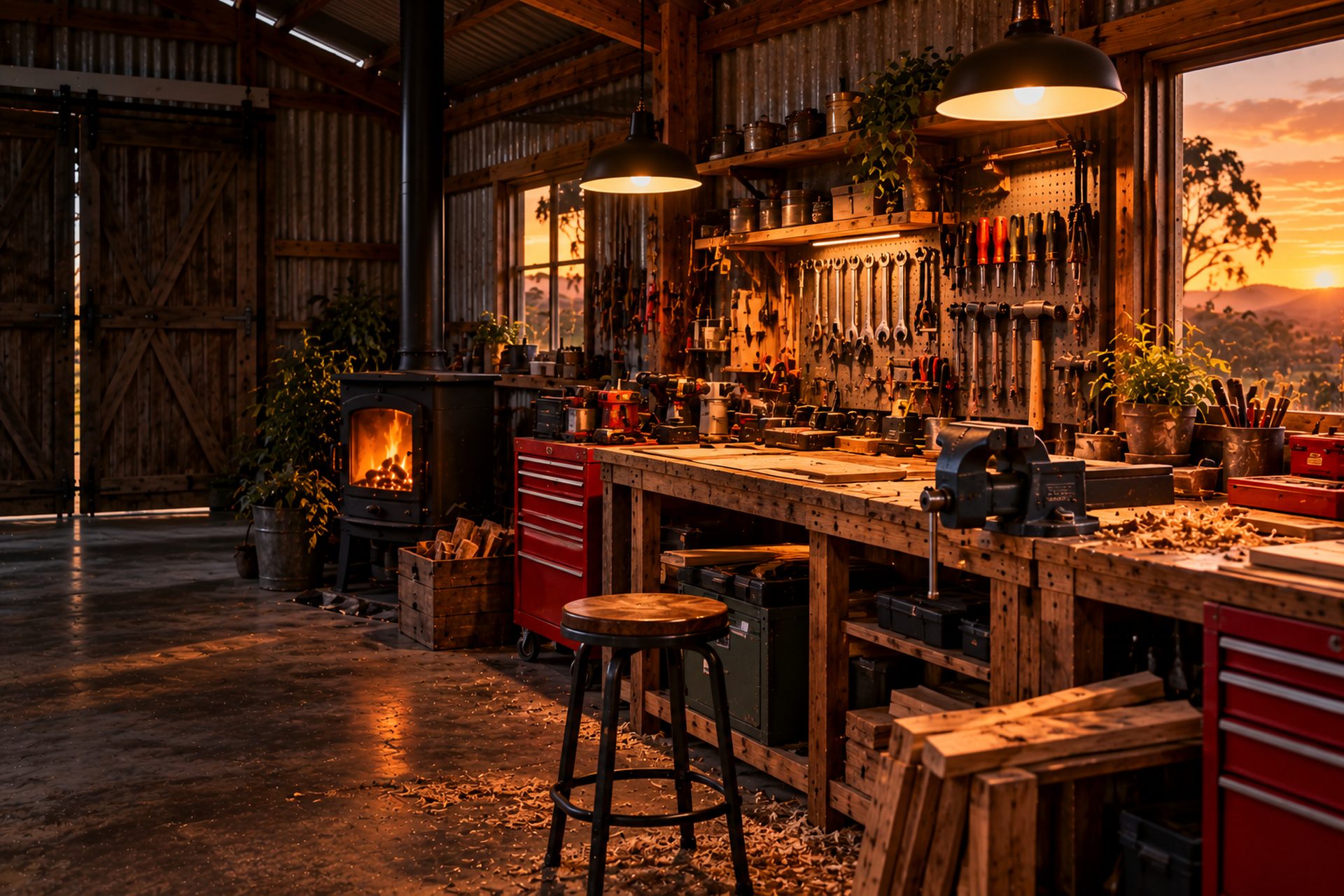
Planning a Shed Workbench: Height, Depth and Timber
How to plan a solid shed workbench: the right height for you, a useful depth, timber choices and making it stiff enough not to wobble.
Read guide →
Shed Shelving: Loads and Layout
Planning shed shelving that holds the weight: load ratings, fixing to the wall, keeping heavy items low and laying out the shed so you can find things.
Read guide →