Strainer Posts and Tying Off Fence Wire
The strainers hold the fence up. Get them right and the rest is easy.
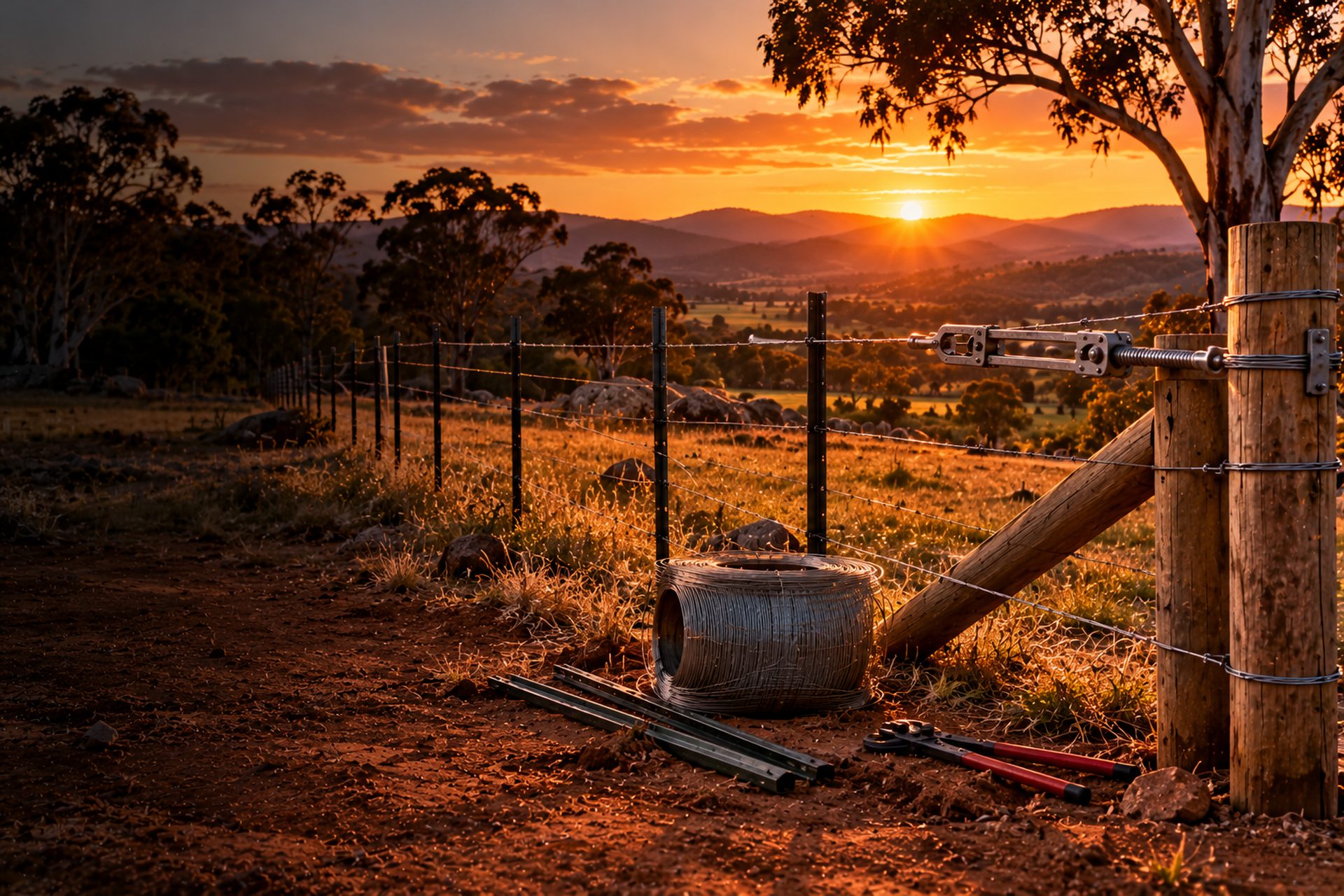
Every tight wire fence pulls hard on its end posts. Strainer posts and their stays (or braces) take that load. If the strainer moves, the whole fence goes slack.
1. Where strainers go
At every end, corner and gateway, and at changes of direction or big dips. Long straight runs often have a strainer part way along too.
2. Assemblies
- Box or H brace: two posts with a horizontal rail and a tensioned diagonal wire.
- Angle stay: a strainer with a diagonal stay into the ground.
Follow the fencing supplier's or your state agriculture department's guide for post depth and spacing.
3. Tensioning
Use a proper wire strainer tool. Tension to the wire maker's recommendation, not as tight as you can.
4. Safety
Tensioned wire stores a lot of energy. If it breaks or slips it can whip back. Wear gloves and eye protection, stand to the side, and never stand in line with the wire.
5. Quick summary
- Strainers at ends, corners, gates and big changes.
- Solid assemblies, properly dug in.
- Tension to the maker's figure, and keep out of the wire's path.
General information only. Check the maker's instructions, and ask your council about approvals.
Related guides
How to Estimate Fencing Materials: Posts, Strainers and Wire
Work out how many star pickets, strainer posts, stays and rolls of wire your farm fence needs, with a worked example for a 600 m paddock.
Read guide →
Planning an Electric Fence: Wire, Insulators and Energiser Size
Work out how much live wire, how many insulators and rolls, and what energiser rating to look for before you buy, with a worked paddock example.
Read guide →